How to Optimize Shopify Product Pages for More Sales (2026 Guide)
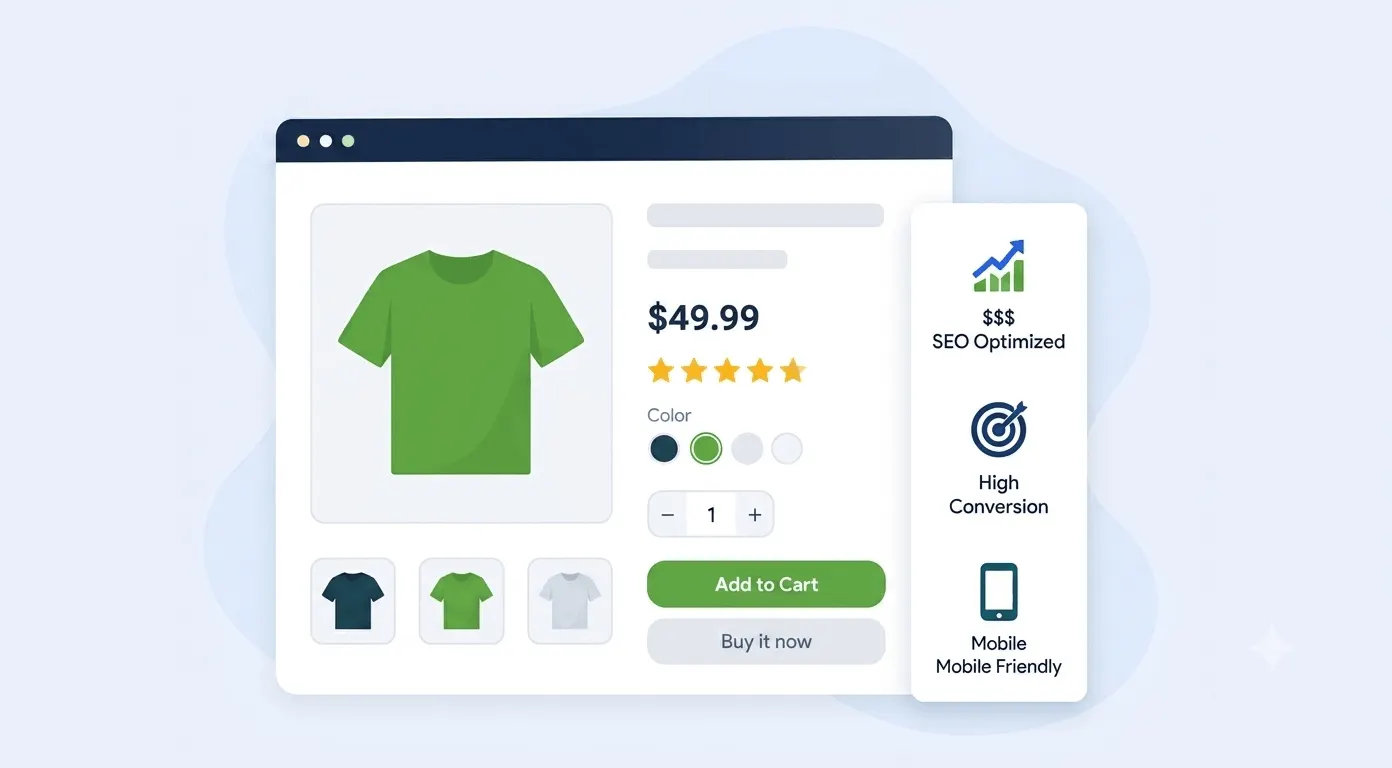
Your Shopify product pages are where buying decisions happen. Well-optimized product pages improve search engine rankings, build customer trust, and increase conversion rates. This comprehensive guide covers proven Shopify SEO, UX, and CRO strategies to help you create product pages that attract more visitors and convert them into loyal customers.
By Codify Infotech
Shopify Expert
Jun 30, 2026
9 min read
By Codify Infotech
Shopify Expert
Jun 30, 2026
9 min read
Introduction
Your product page is one of the most important pages on your Shopify store. It is
where visitors evaluate your product, compare alternatives, and decide whether to
make a purchase.
An effective product page does more than showcase a product—it answers
customer questions, builds confidence, highlights benefits, and removes friction from
the buying journey. Search engines also rely on well-structured product pages to
understand your content and rank it for relevant searches.
By combining SEO best practices, persuasive copywriting, quality visuals, trust
signals, and performance optimization, you can significantly improve both organic
traffic and conversion rates.
This guide walks you through every essential step to optimize Shopify product pages
for better rankings, increased engagement, and more sales.
Quick Summary
A high-converting Shopify product page combines SEO, compelling copy, trust
signals, high-quality images, mobile optimization, and a seamless buying
experience. In this guide, you'll learn practical techniques to improve product
visibility, reduce bounce rates, and maximize sales.
Mention how apps like your review solution can help without making the article feel like an advertisement.
7. Optimize for Mobile Devices
Explain:
Responsive layouts
Easy-to-tap buttons
Fast loading
Sticky Add to Cart
Mobile-friendly galleries
Readable typography
Simplified checkout
8. Improve Shopify Page Speed
Discuss:
Image optimization
WebP images
Lazy loading
Remove unused apps
Lightweight themes
Reduce JavaScript
Optimize fonts
Core Web Vitals
9. Increase Conversion Rate
Cover:
Strong CTA buttons
Limited-time offers
Low stock indicators (used honestly)
Free shipping thresholds
Related products
Frequently Bought Together
Recently viewed products
Exit-intent offers
10. Increase Average Order Value
Explain:
Upsells
Cross-sells
Bundles
Volume discounts
Subscription options
Gift wrapping
Accessories
11. Product Page Design Best Practices
Discuss:
Clean layout
White space
Clear pricing
Product availability
Delivery estimates
Sticky Add to Cart
Accordion sections
Customer FAQs
Social sharing
12. Common Shopify Product Page Mistakes
Discuss:
Duplicate product descriptions
Low-quality images
Missing ALT text
Slow loading pages
Weak CTAs
No reviews
Poor mobile experience
Missing shipping details
Too many popups
Poor internal linking
Product Page Optimization Checklist
Create a practical checklist covering:
SEO
Images
Content
Mobile
Speed
Reviews
Trust
Analytics
CRO
Accessibility
FAQ
Shopify product page optimization is the process of improving product pages for
search engines and customers by enhancing SEO, content, design, speed, trust
signals, and conversion elements to increase visibility and sales.
Optimized product pages improve search rankings, increase organic traffic, provide a
better shopping experience, reduce bounce rates, and encourage more visitors to
complete purchases.
Use descriptive product titles, write unique product descriptions, optimize images
with ALT text, create SEO-friendly URLs, implement Product Schema, add internal
links, and ensure pages load quickly on both desktop and mobile devices.
A strong Shopify product page should include high-quality images, detailed
descriptions, customer reviews, pricing, availability, trust badges, shipping and return
information, FAQs, related products, and a clear call-to-action button.
Authentic customer reviews and ratings provide social proof, build trust, answer
buyer concerns, and help shoppers feel more confident about making a purchase,
which can improve conversion rates.
Yes. Faster-loading product pages improve user experience, reduce abandonment,
support better search rankings, and often lead to higher conversion rates, especially
on mobile devices.
Absolutely. Since a large percentage of eCommerce traffic comes from
smartphones, product pages should be responsive, easy to navigate, fast-loading,
and simple to purchase from on mobile devices.
Review and update product pages regularly by improving descriptions, refreshing
images, adding new customer reviews, updating SEO metadata, and testing
conversion elements to keep pages competitive and relevant.
Conclusion
Optimizing Shopify product pages is an ongoing process rather than a one-time task.
Regularly review performance, test new layouts, improve product content, and
analyze customer behavior. Small improvements in SEO, usability, and trust can
collectively lead to meaningful gains in traffic, conversions, and revenue.
Whether you're launching a new store or improving an existing one, investing in
product page optimization is one of the highest-impact ways to grow your Shopify
business.